Clinical Service

VaginalRestore Clinical Services
Recurrent vaginal infections may be associated with microbial imbalances, resistant organisms, or disruptions in the vaginal microbiome. Our pharmacists interpret diagnostic findings to help identify contributing factors and guide individualized, evidence-informed treatment strategies.

What is the Vaginalrestore Clinical Service?
The Vaginalrestore Clinical Service is a targeted approach to managing vaginal infections and microbiome imbalance. Recurrent or persistent vaginal infections are often complicated by biofilm, a protective matrix that shields bacteria from standard antibiotic therapy and the immune system. Our service addresses this barrier directly.
Using molecular diagnostics, our pharmacists identify the specific organisms present in the vaginal environment and provide clinical interpretation to guide treatment. This allows for a precise, personalized compounded prescription delivered topically to clear the infection and support restoration of a healthy vaginal microbiome.
How it works
Our PharmD i3 process (Identify, Interpret, Intervene) guides every clinical service engagement:
- Identify: Molecular diagnostics pinpoint the specific bacteria, yeast, and resistance genes present in the vaginal environment.
- Interpret: Our pharmacists provide clinical interpretation of diagnostic results to support your provider in selecting the most appropriate therapy.
- Intervene: A personalized TargetedRx is compounded in a topical base designed to penetrate biofilm and treat the identified infection while supporting microbiome restoration.
Who is this service for?
This service is designed for patients and providers managing:
- Recurrent bacterial vaginosis that has not responded to standard antibiotic treatment
- Persistent or chronic vaginal infections with suspected biofilm involvement
- Vaginal microbiome imbalance contributing to ongoing symptoms or discomfort
- Patients seeking a personalized, pharmacist-guided approach to vaginal health
What is Bacterial Vaginosis?
Bacterial Vaginosis (BV) is a common vaginal condition caused by an imbalance in the natural bacteria found in the vagina. The vagina typically contains a mix of "good" bacteria (like Lactobacillus) and "bad" bacteria. When the balance is disrupted, harmful bacteria can overgrow, leading to BV.
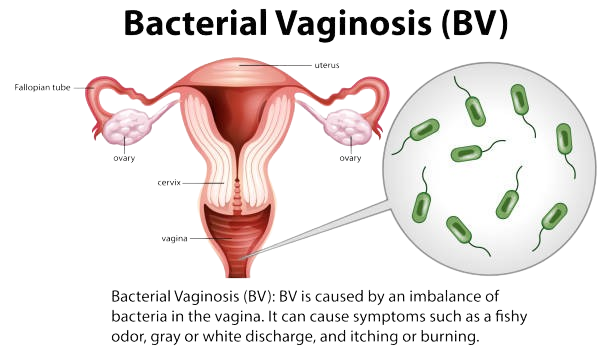
Causes of BV
- Overgrowth of harmful bacteria: The primary cause is an overgrowth of anaerobic bacteria, such as Gardnerella vaginalis, which normally exist in small numbers.
- Disruptions to vaginal pH: The vagina is naturally acidic, which helps maintain a healthy bacterial balance. Anything that alters this pH balance, such as unprotected sex, douching, or certain hygiene products, can increase the risk of BV.
- Sexual activity: Although not considered a sexually transmitted infection (STI), BV is more common in sexually active women. New or multiple sexual partners can increase the risk.
- Antibiotic use: Antibiotics can disrupt the natural balance of bacteria in the vagina, making it more prone to infections like BV.
- Hormonal changes: Pregnancy, menopause, and other hormonal fluctuations can also impact the vaginal microbiome and contribute to BV.
Common symptoms
- Unusual vaginal discharge: Thin, grayish-white, or yellow in color, sometimes with a fishy odor especially after sex.
- Vaginal odor: A characteristic "fishy" smell caused by the overgrowth of bacteria.
- Itching or irritation: Mild itching or discomfort around the vaginal area.
- Burning sensation: A burning feeling during urination or after sex.

How is Bacterial Vaginosis treated?
If your provider suspects an infection, they will swab the vaginal cavity and send it to a lab to determine which organisms are present. If an infection is found, it may be protected by biofilm, making it significantly more difficult to treat with standard therapy.
Bacterial Vaginosis can be treated with antibiotics either orally or topically. Topical treatments are preferred when infection is recurrent or when a biofilm is suspected, as they deliver medication directly to the affected tissue.
Bacterial vaginosis (BV) recurs in 50% to 75% of women within 6–12 months of standard antibiotic treatment alone, largely due to persistent biofilm on the vaginal epithelium that protects pathogenic bacteria from antimicrobial agents.
Swidsinski A, et al. Adherent biofilms in bacterial vaginosis. Obstet Gynecol. 2005;106(5):1013–1023.
Women with BV-associated biofilms are more than three times as likely to experience recurrent infection compared to those without biofilm presence. Probiotic Lactobacillus supplementation following antibiotic therapy significantly reduces recurrence rates by restoring healthy vaginal flora.
Muzny CA, et al. Pathogenesis of bacterial vaginosis: discussion of current hypotheses. J Infect Dis. 2019;220(Suppl 2):S110–S117.

Vaginalrestore Program
The Vaginalrestore Program offered at Customedico Pharmacy + Wellness is a comprehensive, on-going initiative to remove and prevent biofilms, treat an infection with a topical TargetedRx, and restore any imbalance to the microenvironment.
Learn MoreConnect with us
Customicro Clinical Services is partnered with Customedico Pharmacy + Wellness, an independently owned compounding pharmacy dedicated to the provision of personalized medications to meet the unique needs of our patients.
Reach out to learn how Customicro Clinical Services can support your patients.
10900 N. Scottsdale Rd #403, Scottsdale, AZ 85254
480-946-1345